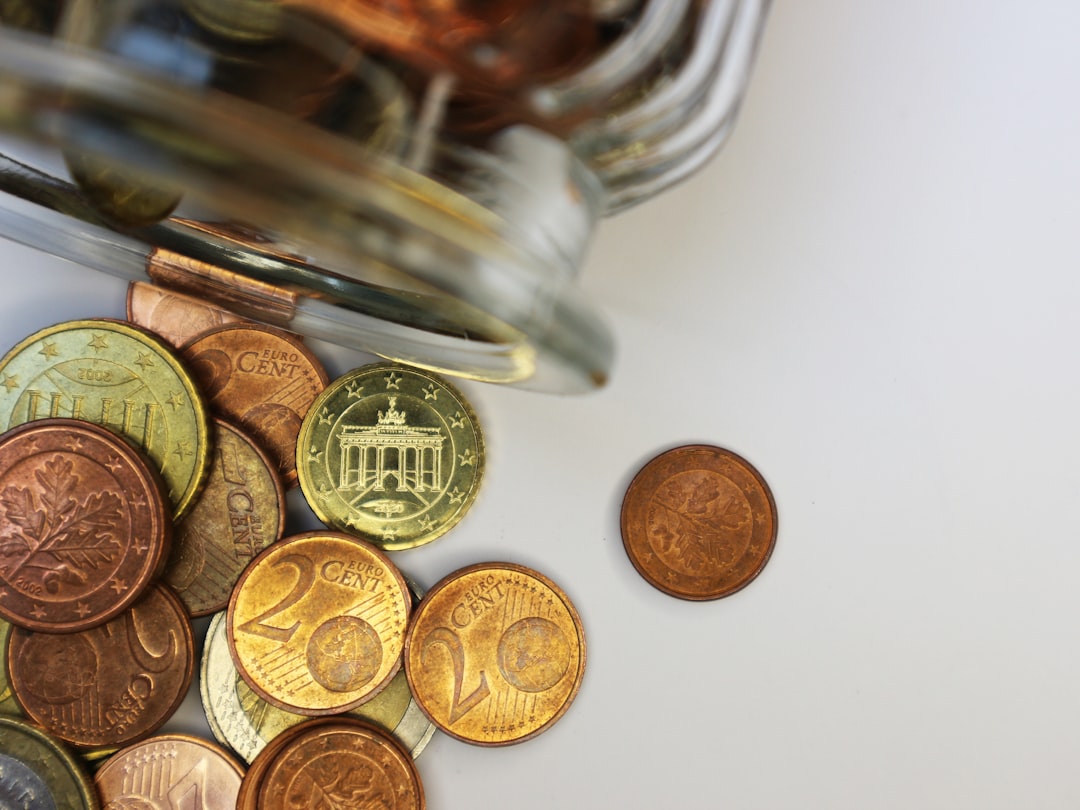
Photo by Roman Wimmers on Unsplash
Best Cash ISA Rates UK April 2026: Up to 4.62% — and Why This Tax Year Matters More Than Usual
April is always the best time to think about cash ISAs. A fresh £20,000 allowance has just landed for every UK adult, rates are competitive, and the new tax year means you have the maximum possible time to let your money grow tax-free before next April. But this April is different from any we have had in recent years — for two reasons that make acting sooner rather than later genuinely important.
First, easy-access cash ISAs are paying rates that, for the first time in years, are matching or beating one-year fixed ISAs. You can currently earn up to 4.62% with instant access — no locking your money away, no penalties for withdrawals, full flexibility. That is an unusual situation and it will not last indefinitely as rate expectations shift.
Second, this is the last tax year in which under-65s can put the full £20,000 into a cash ISA. From April 2027, the cash ISA allowance for under-65s drops to £12,000. Savers aged 65 and over retain the £20,000 limit. If you have been meaning to make full use of your cash ISA allowance, 2026/27 is the year to do it.
This guide covers the best rates available right now, how each type of cash ISA works, when they make sense versus a standard savings account, the FSCS protection update, and the key decisions most savers get wrong.
The Best Cash ISA Rates in April 2026
All rates below are correct as of 23 April 2026. Cash ISA rates change frequently — always verify directly with the provider before opening.
Easy-Access Cash ISAs (no withdrawal penalties)
Easy-access ISAs let you put money in and take it out whenever you like without losing interest. They are the most flexible option and right now they are paying exceptionally competitive rates.
| Provider | AER | Notes |
|---|---|---|
| Trading 212 | 4.51% | Top rate for new money. Includes a 0.91% bonus for 12 months. eToro account required, ISA powered by Moneyfarm. Capital at risk on some products — confirm ISA is cash only. |
| Plum | 4.31% | Top for ISA transfers in. Includes a 1.77% bonus for new users held for 12 months. Base rate 2.54%. FSCS protected via Lloyds Bank, Citibank, QNB and BBVA. |
| Virgin Money | 4.15% | Top big-name provider. No bonus rate complexity, straightforward account, fully FSCS protected. Strong choice if you prefer an established bank. |
Fixed-Rate Cash ISAs (money locked for a set term)
Fixed-rate ISAs pay a guaranteed rate for a defined period. Early withdrawal typically incurs a penalty — usually equivalent to a set number of days' interest — so only fix money you are confident you will not need.
| Provider | AER | Term | Notes |
|---|---|---|---|
| Investec | 4.52% | 1 year | Top one-year fixed rate. Well-regarded challenger bank, fully FSCS protected. |
| Santander | 4.50% | 2 years | Competitive two-year fix. Existing Santander customers can open online in minutes. |
| Various (best available) | 4.65% | 1–2 years | MoneyWeek identified the top one-year and two-year fix at 4.65% in mid-April. Check Moneyfacts and MSE for the live best-buy table as this changes daily. |
| Various (best available) | 4.55% | 3 years | Best three-year fixed rate. Only consider fixing for three years if you are certain you will not need the money. |
Do You Actually Need a Cash ISA? The Tax Maths
A cash ISA is a tax-free savings account — you never pay tax on the interest, regardless of how much you earn. But whether that tax protection is worth anything to you depends on how much interest you earn and what your income tax band is.
Every UK taxpayer also has a Personal Savings Allowance (PSA) — a separate annual allowance for tax-free interest outside of ISAs:
- Basic-rate taxpayers (20%): £1,000 of interest tax-free per year
- Higher-rate taxpayers (40%): £500 of interest tax-free per year
- Additional-rate taxpayers (45%): no PSA — all interest is taxable
For higher-rate taxpayers the threshold is lower — around £11,600 before the £500 PSA is used up. For additional-rate taxpayers, every penny of savings interest is taxable, making the ISA wrapper immediately valuable on any amount.
But the tax argument is not the only reason to use a cash ISA. The other strong reason is sheltering future growth. Once money is inside an ISA wrapper, it stays tax-free indefinitely — even as your pot grows and interest compounds over years. A higher-rate taxpayer who fills their cash ISA this year at £20,000 and then moves it to a stocks and shares ISA later has sheltered that money from tax permanently. The ISA wrapper is a long-term asset, not just an annual tax dodge.
The case for using your cash ISA allowance is strongest if:
- You are a higher or additional rate taxpayer
- You have savings above £11,000–£23,000 (depending on your tax band)
- You expect your savings balance to grow significantly over the coming years
- You are planning to use the cash ISA as a stepping stone to a stocks and shares ISA later
- You have modest savings well within your PSA
- You need the money within a few months (some ISAs have restrictions on same-year withdrawals)
- A standard savings account is paying a meaningfully higher rate for the same access terms
The April 2027 Allowance Cut — Why 2026/27 Matters
From 6 April 2027, the annual cash ISA allowance for adults under 65 will be cut from £20,000 to £12,000. Adults aged 65 and over retain the £20,000 limit. The stocks and shares ISA allowance remains at £20,000 for all ages.
This is confirmed government policy, not a proposal. It will happen.
What it means in practice: if you are under 65, this is the last tax year you can put £20,000 into a cash ISA. From next April, your annual cash ISA limit will be £12,000. Money already inside your ISA is unaffected — it stays there, tax-free, regardless of the allowance change. But new money you contribute from April 2027 onwards will be subject to the lower limit.
If you have £20,000 in accessible savings sitting outside an ISA right now, moving it in before 5 April 2027 is worth considering. Once inside the wrapper, that money is sheltered permanently regardless of what happens to the allowance in future years.
The cut is designed to push savers towards stocks and shares ISAs for longer-term saving — a reasonable policy objective, though it reduces flexibility for those who prefer cash for short-term goals.
The FSCS Limit Rise to £120,000
One piece of genuinely good news for savers this year: the Financial Services Compensation Scheme (FSCS) limit rose to £120,000 per person, per institution in early 2026, up from £85,000.
This matters because it determines how much of your savings is protected if a bank or building society fails. For most savers with balances well under £85,000 the increase makes no difference in practice. But for those using cash ISAs over many years — whose balances have grown with the cumulative effect of contributions and interest — the higher limit provides meaningful additional protection.
The FSCS covers UK-regulated banks, building societies, and credit unions. It does not automatically cover every product from every provider — always check that your specific account is FSCS-protected, particularly with newer fintech providers where savings may be held with a partner bank rather than directly.
For balances above £120,000: Spread savings across multiple FSCS-protected institutions to ensure every pound is covered. A couple can hold up to £240,000 in a joint account at a single institution (£120,000 each). Transferring between ISAs does not affect the FSCS limit per institution — each provider is assessed separately.
ISA Transfers: Move Without Losing Your Allowance
If you have cash ISA savings from previous years sitting in an account paying a poor rate, you can transfer them to a better deal without affecting your current year's allowance.
The rules are straightforward but commonly misunderstood:
Do not withdraw and redeposit. If you take money out of an ISA and put it back into a new one, it counts against your current year's £20,000 allowance. If your existing ISA balance is £50,000, you cannot move it this way without using up multiple years of allowance.
Use a formal ISA transfer. Contact the new provider and request a transfer — they handle the movement directly with your existing provider. The money leaves one ISA and arrives in another without ever being counted against your allowance. You can transfer as much as you like from previous years' ISAs using this method.
Check whether the new account accepts transfers in. Not all ISAs do. The top easy-access rates from providers like Plum accept transfers but at a slightly lower rate than new money. Check the specific terms before initiating a transfer.
Transfer timing: ISA transfers can take up to 15 working days for cash ISAs. If you are transferring a fixed ISA before the end of its term, check the early withdrawal penalty first — it may not be worth moving until the fix matures.
Cash ISA vs Stocks and Shares ISA: The Right Split
For most savers, the question is not cash ISA versus stocks and shares ISA — it is how to use both.
A cash ISA makes sense for:
- Money you need within the next 1–5 years
- Emergency fund savings (though an easy-access savings account often works equally well)
- Savers who are uncomfortable with any investment risk
- Short-term goals — house deposit, car, home improvements
- Money you will not need for at least 5 years, ideally 10+
- Long-term wealth building alongside or instead of a pension
- Higher earners who have already maxed their pension contributions
Common Cash ISA Mistakes to Avoid
Not transferring poor-rate ISAs. Millions of pounds sit in cash ISAs paying 1–2% from years ago. The money is still tax-sheltered but earning far below the market rate. Check what rate your existing ISAs pay — anything below 3.5% should prompt a review.
Confusing the ISA allowance with the amount you can hold. The £20,000 is how much new money you can add this tax year. There is no limit on the total you can hold inside an ISA over many years. A saver who has been contributing since 1999 could legitimately hold over £300,000 in ISAs.
Choosing a rate without checking the bonus small print. Several top rates include introductory bonuses that expire after 12 months. If you open a 4.31% account built on a 2.54% base rate plus a 1.77% bonus, your rate drops to 2.54% in year two unless you switch. Set a reminder.
Not opening an ISA because the tax benefit seems small. The immediate tax benefit may be modest if your savings are small. The long-term benefit of sheltering money that will grow for decades is not. Open the ISA now even if you only put £100 in — the habit and the wrapper are both worth establishing.
Waiting until the end of the tax year. Every month you delay is a month of tax-free interest lost. There is no benefit to waiting — the full £20,000 allowance is available from 6 April. Earlier contributions earn more.
Frequently Asked Questions
Can I open multiple cash ISAs in the same tax year? Yes, since April 2024 you can open and pay into multiple cash ISAs in the same tax year, as long as your total contributions across all ISAs (cash, stocks and shares, LISA, innovative finance) do not exceed £20,000.
Can I pay into a cash ISA and a stocks and shares ISA in the same year? Yes. You can split your £20,000 allowance across any combination of ISA types in the same tax year. For example, £10,000 into a cash ISA and £10,000 into a stocks and shares ISA.
Is my cash ISA safe if the provider goes bust? Up to £120,000 per person, per institution is protected by the FSCS. Always check that your specific account is FSCS-protected — most UK-regulated banks and building societies are, but confirm with fintech providers where savings may be held with a partner bank.
What happens to my cash ISA if I move abroad? You can keep your existing ISA and it remains tax-free. But you generally cannot open a new ISA or contribute to an existing one once you are no longer a UK resident. Check HMRC's guidance if you are planning to move.
Can I transfer a cash ISA into a stocks and shares ISA? Yes. You can transfer between ISA types at any time using a formal ISA transfer — contact the receiving provider to initiate it. Previous years' ISA money can be moved in full without affecting your current year's allowance.
The rate on my cash ISA has dropped. What should I do? Providers can cut easy-access rates at any time. Check your rate regularly — at least every three months. If a better deal is available, initiate a transfer. There is no cost to moving between ISAs and no tax consequence.
For live best-buy tables updated daily, MoneySavingExpert's cash ISA guide and Moneyfacts are the most reliable sources. Both show current rates and flag any bonus rate conditions clearly.
This article is for informational purposes only and does not constitute financial advice. Rates correct as of 23 April 2026 and subject to change. Tax treatment depends on individual circumstances. FSCS protection applies per institution subject to eligibility. Always verify rates directly with the provider before opening an account.
Was this article helpful?
Comments
Join the discussion
The Friday Money Brief
One money tip every Friday. No spam. Unsubscribe any time.
No comments yet.